


A Semiquincentennial of Liberty: Reflecting on America’s 250th Birthday


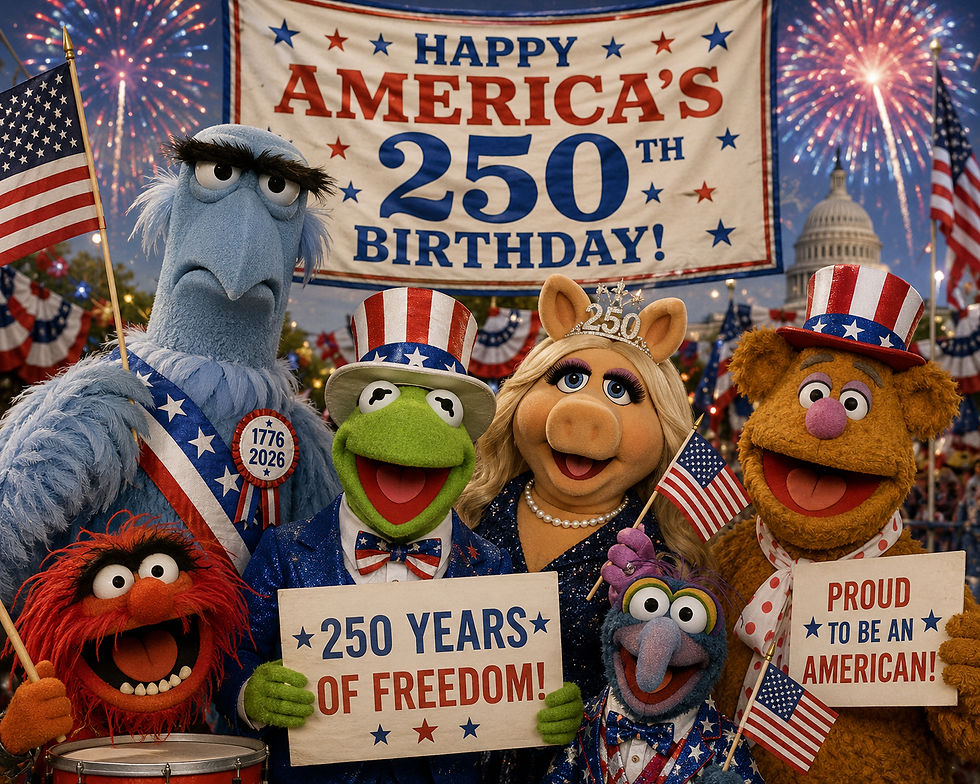
We are on the cusp of an extraordinary milestone. On July 4, 2026, the United States of America marks its 250th birthday. Across the nation, fireworks will paint the night sky, parades will march down main streets, and families will gather over backyard barbecues. It is a moment of profound celebration—a Semiquincentennial.
But as the smoke from the fireworks clears, a deeper question calls for our attention: *Do we truly understand the cost of the ground we stand on?*
When we look back across 250 years, it is easy to view the birth of America as an inevitable march of history. We see pristine oil paintings of dignified men in powdered wigs sitting calmly in Philadelphia. But liberty was never a calm, sterile event. It was a messy, dangerous, and deeply sacrificial act of faith. To truly celebrate how far we have come, we must reflect on the real cost paid by the 56 men who signed the Declaration of Independence, the divine blueprint they trusted, and the spiritual parallels that call us to gratitude today.
The Divine Blueprint: Built on a Creator's Foundation
The document that started it all wasn’t merely a political break-up letter sent to King George III; it was a profound philosophical statement grounded in a specific theological worldview. The signers did not claim that human government grants people their rights. Instead, they explicitly anchored human dignity in a higher power.
Consider the foundational words we all know so well: "We hold these truths to be self-evident, that all men are created equal, that they are endowed by their Creator with certain unalienable Rights..."
The generation that achieved American independence was deeply shaped by Christian moral truths and a biblical worldview (Hall, 2019). While academic debates continue over the exact personal orthodoxy of leaders like Thomas Jefferson or Benjamin Franklin, the cultural and structural framework of the founding era was unmistakably saturated in Christian principles (Sandoz, 2008).
The concept of a "Creator" or "Supreme Judge of the world" was not a casual rhetorical flourish. It was the absolute philosophical anchor of their argument. If rights are given by a king or a parliament, a king or a parliament can take them away. But if human beings are made in the *Imago Dei*—the image of God—then those rights are woven into the very fabric of creation itself (Hall, 2019). Government’s only legitimate job, therefore, is not to grant freedom, but to protect what the Creator has already given.
The signers concluded their bold declaration by placing their fate entirely in the hands of God, writing of their *"firm reliance on the protection of divine providence."* They knew that without the hand of the Almighty, their earthly rebellion was doomed to failure (Hutcherson, 1995).
The Real Cost of "Sacred Honor"
What did it actually mean for those 56 men to sign their names to that piece of parchment? They were not wild-eyed, reckless radicals with nothing to lose. They were lawyers, merchants, jurists, and plantation owners. They were men of education and substantial wealth. They had security, comfort, and status. Yet, they willingly traded their comfort for a dangerous gamble on liberty, knowing full well that under British law, signing the Declaration was an act of high treason—a crime punishable by a brutal death.
Many of us are familiar with the stirring closing pledge of the Declaration: *"...we mutually pledge to each other our lives, our fortunes, and our sacred honor."* For many of them, that pledge became an immediate, agonizing reality. While popular internet lore has occasionally exaggerated some details of their fates, the verified historical reality of their sacrifices remains staggering.
John Hart (New Jersey): Was driven from the bedside of his dying wife. His thirteen children were forced to flee for their lives, and his fields and gristmill were thoroughly systematically destroyed by advancing British troops. He spent months hiding in forests and caves, surviving under extreme physical hardship. When he finally returned home, he found his wife dead and his children scattered. He died shortly thereafter from physical exhaustion and a broken heart.
Thomas Nelson Jr. (Virginia): During the pivotal Battle of Yorktown, Nelson noted that British General Cornwallis had taken over his own beautiful family home to use as a military headquarters. Rather than protecting his property, Nelson quietly urged General George Washington and the Continental artillery to open fire on it. The home was heavily damaged, his personal fortune was completely wiped out helping to fund the war effort, and he died bankrupt.
Francis Lewis (New York): Had his home and properties completely destroyed by British forces. Cruelly, the enemy captured his wife and threw her into a harsh military prison with barely enough food or bedding to survive. Her health was permanently broken, and she passed away only a few months after her release.
Carter Braxton (Virginia): A phenomenally wealthy planter and maritime trader, Braxton saw his merchant ships swept entirely from the seas by the British Royal Navy. To pay off his mounting wartime debts, he was forced to sell his vast estates and properties, spending his final days in relative poverty compared to the great wealth he had once surrendered for the cause.
Thomas McKean (Delaware): Was so relentlessly hounded by British forces that he was forced to move his family almost constantly to keep them one step ahead of capture. He served in the Continental Congress without a dime of pay, keeping his family in hiding while his personal possessions were seized.
These men did not look at liberty as a theoretical academic exercise. They paid for it in cold cash, charred homes, broken health, and family tragedy. They fought their own established government because they believed a free future under God was worth more than a comfortable present under tyranny.
Reflection: Freedom is Never Free
As we celebrate America’s 250th birthday, we are left with a powerful spiritual and historical parallel. The blessings of the political freedom we enjoy today were bought by the blood, tears, and ruined fortunes of men who believed in a transcendent moral order. We must never take these liberties for granted.
But as Christian believers reflect on the cost of American freedom during this historic milestone, our minds are naturally drawn to an even greater sacrifice. Just as our earthly freedom required a heavy, painful price, our eternal freedom required an infinite one.
The liberties of this world cost the fortunes of men; the liberty of our souls cost the life of the Son of God.
On the cross of Calvary, Jesus Christ suffered, bled, and died to break the chains of sin and give us ultimate, unshakable salvation. The signers of the Declaration pledged their lives and fortunes for a temporal nation, but Jesus gave His life to secure an eternal kingdom for all who believe.
This 4th of July, let’s do more than just light sparklers and watch parades. Let’s take a quiet moment to look back at the 250-year journey of our nation. Let us praise the Lord for the historic, unprecedented freedoms we are privileged to enjoy in this country. And most importantly, let us remember the ultimate cost of the cross—reminding ourselves that whether in this life or the next, true freedom is never free.
You are loved.
Ray Reynolds
References
Hall, M. D. (2019). *Did America have a Christian founding?* The Heritage Foundation. https://www.heritage.org/political-process/report/did-america-have-christian-founding
Cited by: 41
Hutcherson, R. A. (1995). *The vision of our founding fathers: One nation under God* (Report No. ADA295687). Defense Technical Information Center. https://apps.dtic.mil/sti/tr/pdf/ADA295687.pdf
Cited by: 1
Sandoz, E. (2008). Religion and the American founding. *Regent University Law Review*, *20*(3), 15-30. https://www.regent.edu/acad/schlaw/student_life/studentorgs/lawreview/docs/issues/v20n3/Sandoz_ReligionandFounding.pdf
Cited by: 4

Comments